 SDG 4 — การศึกษาที่มีคุณภาพ
กิจกรรมจิตอาสาในการส่งเสริมพัฒนาการเด็กปฐมวัยทั้ง 4 ด้าน
บริบทและเหตุผล
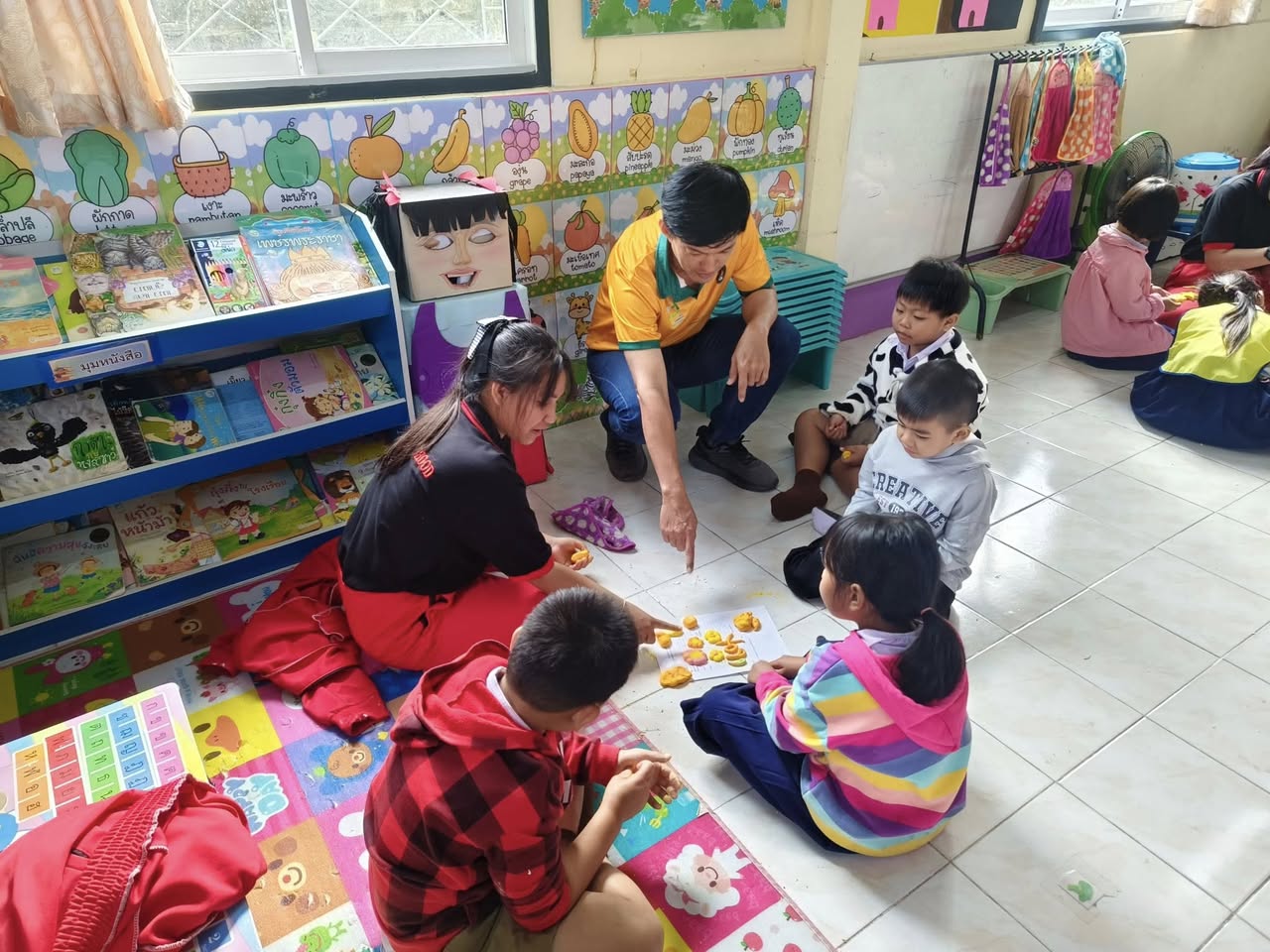
การดำเนินงานในครั้งนี้คือ การจัดกิจกรรมจิตอาสาในโครงการวิทยาศาสตร์ “หนูน้อยนักปั้นแป้งสบู่หรรษา” สำหรับนักเรียนชั้นอนุบาล 2-3 ซึ่งจัดขึ้นในวันที่ 4 กุมภาพันธ์ 2568 ณ โรงเรียนบ้านหนองบัว ตำบลหมากแข้ง อำเภอเมือง จังหวัดอุดรธานี นำโดย อาจารย์รัชชัช นัทธี ผู้สอนรายวิชาวิทยาศาสตร์และประเด็นร่วมสมัย พร้อมด้วยนักศึกษาสาขาวิชาการศึกษาปฐมวัย ชั้นปีที่ 2 คณะครุศาสตร์ มหาวิทยาลัยราชภัฏอุดรธานี โครงการนี้เกิดขึ้นจากความสำคัญของการส่งเสริมพัฒนาการเด็กปฐมวัยอย่างรอบด้าน ทั้งด้านร่างกาย อารมณ์-จิตใจ สังคม และสติปัญญา การนำกระบวนการทางวิทยาศาสตร์แบบลงมือปฏิบัติ (Hands-on Learning) มาประยุกต์ใช้ผ่านกิจกรรมการปั้นแป้งสบู่ ถือเป็นกลไกยุทธศาสตร์ในการกระตุ้นกล้ามเนื้อมัดเล็ก เสริมสร้างจินตนาการ ปลูกฝังทักษะการสังเกตทางวิทยาศาสตร์ และเปิดโอกาสให้เด็กในชุมชนท้องถิ่นได้รับประสบการณ์การเรียนรู้ที่มีคุณภาพอย่างเท่าเทียม
กิจกรรมและการดำเนินงาน
ในวันที่ 4 กุมภาพันธ์ 2568 กระบวนการดำเนินงานได้ขับเคลื่อนผ่านกิจกรรมจิตอาสาเรียนรู้เชิงรุก (Active Learning) กิจกรรมหลักประกอบด้วย การสอนกระบวนการผสมและปั้นแป้งสบู่เพื่อส่งเสริมการทำงานของกล้ามเนื้อมัดเล็กและการประสานสัมพันธ์ระหว่างมือกับตา (พัฒนาการด้านร่างกาย), การส่งเสริมสมาธิ ความเพลิดเพลิน และการถ่ายทอดอารมณ์ผ่านผลงานศิลปะ (พัฒนาการด้านอารมณ์-จิตใจ), การจัดกลุ่มทำกิจกรรมร่วมกันเพื่อฝึกการแบ่งปันและการสื่อสารกับเพื่อน (พัฒนาการด้านสังคม), ตลอดจนการสอดแทรกความรู้ทางวิทยาศาสตร์พื้นฐานเกี่ยวกับการเปลี่ยนแปลงของสัมผัส สี และกลิ่นของแป้งสบู่ (พัฒนาการด้านสติปัญญา) โดยมีนักศึกษาสาขาวิชาการศึกษาปฐมวัยเป็นผู้ดูแลอย่างใกล้ชิด
ภาคีเครือข่ายความร่วมมือ (หุ้นส่วน)
ความสำเร็จในการส่งเสริมพัฒนาการเด็กปฐมวัยในครั้งนี้ เกิดจากการบูรณาการความร่วมมือระหว่างสถาบันอุดมศึกษาและโรงเรียนในชุมชน นำโดย สาขาวิชาการศึกษาปฐมวัย คณะครุศาสตร์ มหาวิทยาลัยราชภัฏอุดรธานี ร่วมกับ คณะครู บุคลากรทางการศึกษา และนักเรียนชั้นอนุบาล 2-3 โรงเรียนบ้านหนองบัว ตำบลหมากแข้ง อำเภอเมือง จังหวัดอุดรธานี
ผลผลิตจากโครงการ
จากการดำเนินโครงการดังกล่าว ส่งผลให้เกิดผลผลิตที่เป็นรูปธรรมคือ การจัดกิจกรรมจิตอาสาส่งเสริมพัฒนาการทางวิทยาศาสตร์และพัฒนาการ 4 ด้าน จำนวน 1 โครงการ และ เกิดนักเรียนชั้นอนุบาล 2-3 โรงเรียนบ้านหนองบัว ได้รับการส่งเสริมพัฒนาการอย่างสมวัย ยิ่งไปกว่านั้น ยังเกิดผลงานการปั้นแป้งสบู่เชิงสร้างสรรค์ของเด็กปฐมวัย ตลอดจนเกิดการพัฒนาสมรรถนะการจัดประสบการณ์การเรียนรู้จริงของนักศึกษาครูสาขาวิชาการศึกษาปฐมวัย
ผลลัพธ์
โครงการมุ่งสู่ผลลัพธ์ที่ครอบคลุมมิติการพัฒนาที่ยั่งยืน ได้แก่:
มิติ SDG 4 (Quality Education - การศึกษาที่เท่าเทียมและทั่วถึง): สร้างหลักประกันให้เด็กทุกคนได้รับการพัฒนาและการศึกษาระดับปฐมวัยที่มีคุณภาพ (Target 4.2) และส่งเสริมการฝึกอบรมเตรียมความพร้อมสำหรับผู้ที่จะเป็นครูในอนาคต (Target 4.c) การจัดกิจกรรมวิทยาศาสตร์ปั้นแป้งสบู่ช่วยกระตุ้นพัฒนาการเด็กปฐมวัยอย่างเป็นระบบในทุกมิติ ขณะเดียวกันยังเป็นการสร้างประสบการณ์การสอนเชิงปฏิบัติให้แก่นักศึกษาครู เพื่อยกระดับคุณภาพการจัดการศึกษาปฐมวัยในท้องถิ่นอย่างยั่งยืน
Early Childhood Education Students at UDRU Conduct "Fun Soap Dough Science" Volunteer Project to Boost Holistic Child Development at Ban Nong Bua School
Second-year Early Childhood Education students from Udon Thani Rajabhat University organize a volunteer science workshop titled "Fun Soap Dough Science" for Kindergarten 2-3 students at Ban Nong Bua School, enhancing holistic early childhood development across physical, emotional, social, and cognitive dimensions through hands-on learning.
Context & Rationale
This early childhood quality education and community volunteer initiative involved conducting the science activity project titled "Fun Soap Dough Science" for Kindergarten 2-3 students. Held on February 4, 2025, at Ban Nong Bua School, Mak Khaeng Subdistrict, Mueang District, Udon Thani Province, the project was led by Lecturer Ratchat Natthee, instructor of the Science and Contemporary Issues course, alongside second-year Early Childhood Education students from the Faculty of Education, Udon Thani Rajabhat University. The primary rationale of this intervention centers on promoting holistic early childhood development across four key domains: physical, emotional-mental, social, and cognitive. Implementing hands-on science activities through soap dough sculpting serves as an effective strategic mechanism to stimulate fine motor skills, foster creativity, instill basic scientific inquiry, and ensure equitable access to high-quality early childhood learning experiences in local schools.
Activities & Operations
On February 4, 2025, the operational sequence was executed through interactive volunteer learning sessions. Key operational workflows included guiding young learners through soap dough mixing and sculpting to improve fine motor control and hand-eye coordination (physical development), encouraging emotional expression and focus through creative art (emotional development), facilitating group work to build sharing and teamwork habits (social development), and integrating basic scientific concepts regarding sensory textures, color mixing, and aromas (cognitive development). The sessions were facilitated by student teachers specializing in early childhood pedagogy.
Multi-Stakeholder Partnerships
The successful execution of this holistic child development project was built on an active university-community partnership. Spearheaded by the Early Childhood Education Program, Faculty of Education at Udon Thani Rajabhat University, the project partnered directly with the administration, teaching staff, and Kindergarten 2-3 students at Ban Nong Bua School, Mueang District, Udon Thani Province.
Project Outputs
As a direct outcome of these strategic operations, 1 volunteer science workshop promoting 4-domain early childhood development was successfully delivered, directly benefiting Kindergarten 2-3 students at Ban Nong Bua School. Furthermore, the initiative produced creative soap dough art products made by young learners and enhanced the practical instructional competencies of pre-service early childhood educators.
Outcomes
The project aims for comprehensive outcomes across the sustainable development dimension:
SDG 4 (Quality Education): Ensure that all girls and boys have access to quality early childhood development, care, and pre-primary education (Target 4.2), while strengthening teacher training and practical preparation for future educators (Target 4.c). Interactive science activities nurture holistic early child growth and empower future teachers with practical pedagogical experience, driving long-term educational quality in local communities.
https://ge.udru.ac.th/website/2025/02/04/กิจกรรมจิตอาสาในการส่ง/