 SDG 4 — การศึกษาที่มีคุณภาพ
 SDG 8 — การจ้างงานที่มีคุณค่าและการเติบโตทางเศรษฐกิจ
 SDG 9 — อุตสาหกรรม นวัตกรรม โครงสร้างพื้นฐาน
2568-2569
SDG 9 — อุตสาหกรรม นวัตกรรม โครงสร้างพื้นฐาน
2568-2569
MOU AIAT
บริบทและเหตุผล
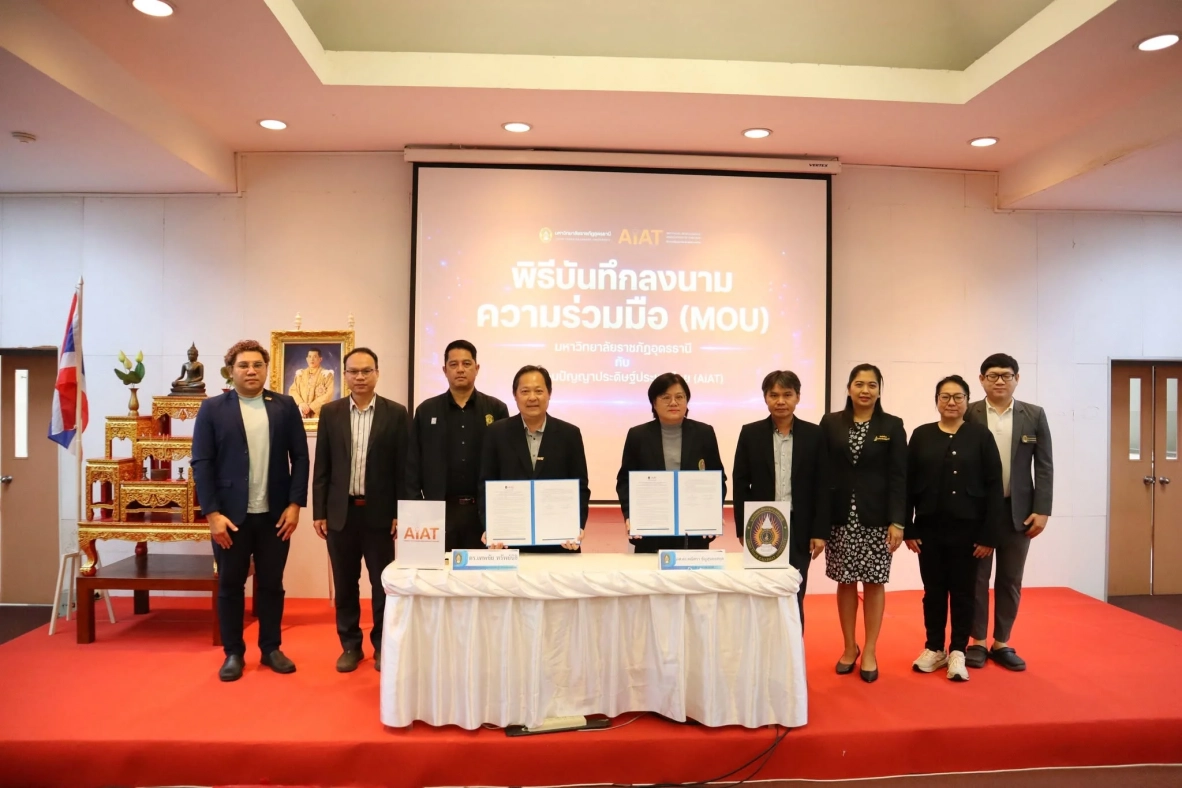
การดำเนินงานในครั้งนี้คือ พิธีลงนามบันทึกข้อตกลงความร่วมมือทางวิชาการ (MOU) ระหว่าง มหาวิทยาลัยราชภัฏอุดรธานี และ สมาคมปัญญาประดิษฐ์ประเทศไทย (AIAT) พร้อมการจัดอบรมเชิงปฏิบัติการในหัวข้อ “Smart Digital Living การประยุกต์ใช้ปัญญาประดิษฐ์เพื่อวิถีชีวิตดิจิทัลอัจฉริยะ” โดยมี ผู้ช่วยศาสตราจารย์ ดร.คณิศรา ธัญสุนทรสกุล อธิการบดีมหาวิทยาลัยราชภัฏอุดรธานี และ ดร.เทพชัย ทรัพย์นิธิ นายกสมาคมปัญญาประดิษฐ์ประเทศไทย เป็นผู้แทนลงนามและเป็นวิทยากรบรรยาย โครงการนี้มีเหตุผลความจำเป็นในการเตรียมความพร้อมและพัฒนากำลังคนให้ทันต่อการเปลี่ยนแปลงในยุคดิจิทัล การสร้างทักษะความเข้าใจและการใช้เทคโนโลยีปัญญาประดิษฐ์ (AI) ถือเป็นกลไกยุทธศาสตร์สำคัญในการยกระดับคุณภาพการเรียนการสอน เพิ่มประสิทธิภาพการทำงานและการวิจัย ตลอดจนสร้างรากฐานกำลังคนที่มีทักษะขั้นสูงเพื่อรองรับตลาดแรงงานและระบบเศรษฐกิจดิจิทัลอย่างยั่งยืน
กิจกรรมและการดำเนินงาน
กระบวนการดำเนินงานประกอบด้วย 2 ส่วนสำคัญ ได้แก่ พิธีลงนามบันทึกข้อตกลงความร่วมมือทางวิชาการ (MOU) เพื่อส่งเสริมการวิจัย พัฒนานวัตกรรม และประยุกต์ใช้เทคโนโลยีปัญญาประดิษฐ์อย่างเป็นรูปธรรม ต่อด้วย การจัดอบรมเชิงปฏิบัติการ “Smart Digital Living” โดยวิทยากรผู้เชี่ยวชาญ ได้แก่ ดร.เทพชัย ทรัพย์นิธิ และ ดร.อัสลาน บุตรจำลอง กิจกรรมเน้นการฝึกปฏิบัติจริงในหัวข้อสำคัญ ได้แก่ การเปลี่ยนโจทย์ทั่วไปให้เป็นโจทย์ขั้นสูง (Transforming Generic Prompts into Advanced Prompts), เทคนิคการเขียน Prompt ขั้นสูงสำหรับงานวิจัยและการทำงาน, การทำงานหลังบ้านกับ AI และการฝึกปฏิบัติการเชื่อมต่อระบบอัตโนมัติ (Automation) เพื่อเพิ่มประสิทธิภาพองค์กร
ภาคีเครือข่ายความร่วมมือ (หุ้นส่วน)
ความสำเร็จในการยกระดับทักษะเทคโนโลยีครั้งนี้ เกิดจากการสร้างพันธมิตรความร่วมมือทางวิชาการที่เข้มแข็ง นำโดย มหาวิทยาลัยราชภัฏอุดรธานี ทำงานร่วมกับ สมาคมปัญญาประดิษฐ์ประเทศไทย (AIAT) ในฐานะองค์กรวิชาชีพและผู้เชี่ยวชาญหลักด้านเทคโนโลยี AI ของประเทศ ในการร่วมวางกรอบความร่วมมือ นำเสนอองค์ความรู้ และถ่ายทอดเทคโนโลยีขั้นสูงให้แก่บุคลากรและนักศึกษา
ผลผลิตจากโครงการ
จากการดำเนินโครงการดังกล่าว ส่งผลให้เกิดผลผลิตที่เป็นรูปธรรมคือ การลงนามบันทึกข้อตกลงความร่วมมือทางวิชาการ (MOU) จำนวน 1 ฉบับ และ การจัดอบรมเชิงปฏิบัติการด้านการประยุกต์ใช้ AI จำนวน 1 ครั้ง ยิ่งไปกว่านั้น ยังเกิดชุดทักษะปฏิบัติด้านการเขียน Prompt ขั้นสูงและการเชื่อมต่อระบบอัตโนมัติด้วย AI ให้แก่ผู้เข้าร่วมอบรม ตลอดจนเกิดกรอบความร่วมมือการพัฒนานวัตกรรมและงานวิจัยด้านปัญญาประดิษฐ์ระหว่างสถาบันอุดมศึกษากับสมาคมวิชาชีพ
ผลลัพธ์
โครงการมุ่งสู่ผลลัพธ์ที่ครอบคลุม 3 มิติ ได้แก่:
มิติ SDG 4 (Quality Education - การศึกษาที่เท่าเทียมและมีคุณภาพ): เพิ่มจำนวนเยาวชนและผู้ใหญ่ที่มีทักษะที่จำเป็น รวมถึงทักษะทางเทคนิคและวิชาชีพ เพื่อการทำงานและการเป็นผู้ประกอบการ (Target 4.4) การฝึกอบรมเชิงปฏิบัติการด้าน AI ช่วยพัฒนาทักษะดิจิทัลขั้นสูง (Digital & AI Literacy) แก่นักศึกษาและบุคลากร เพื่อยกระดับคุณภาพการศึกษาและการเรียนรู้ตลอดชีวิต
มิติ SDG 8 (Decent Work and Economic Growth - การจ้างงานที่ดีและการเติบโตทางเศรษฐกิจ): บรรลุการมีผลิตภาพทางเศรษฐกิจในระดับที่สูงขึ้นผ่านการสร้างหลากหลายทางเทคโนโลยีและนวัตกรรม (Target 8.2) การประยุกต์ใช้ AI และระบบอัตโนมัติช่วยเพิ่มประสิทธิภาพและผลิตภาพในการทำงาน เตรียมความพร้อมให้บุคลากรและนักศึกษามีทักษะแห่งอนาคตที่ตอบโจทย์ตลาดแรงงานยุคดิจิทัล
มิติ SDG 9 (Industry, Innovation, and Infrastructure - อุตสาหกรรม นวัตกรรม และโครงสร้างพื้นฐาน): ส่งเสริมการวิจัยทางวิทยาศาสตร์ ยกระดับขีดความสามารถทางเทคโนโลยี และสนับสนุนนวัตกรรม (Target 9.5) การลงนามความร่วมมือและฝึกเขียน Prompt ขั้นสูงสำหรับงานวิจัย ช่วยเร่งการสร้างสรรค์นวัตกรรมดิจิทัลและการประยุกต์ใช้เทคโนโลยีปัญญาประดิษฐ์ในสถาบันอุดมศึกษาอย่างยั่งยืน
Udon Thani Rajabhat University Partners with AIAT to Sign MOU and Host "Smart Digital Living" Workshop to Advance AI Competencies and Innovation
Udon Thani Rajabhat University Partners with AIAT to Sign MOU and Host "Smart Digital Living" Workshop to Advance AI Competencies and Innovation
Context & Rationale
This artificial intelligence integration and capacity-building initiative involved executing a Memorandum of Understanding (MOU) between Udon Thani Rajabhat University and the Artificial Intelligence Association of Thailand (AIAT), alongside hosting the hands-on workshop "Smart Digital Living: AI Applications for Smart Digital Lifestyles." The MOU signing and training were led by UDRU President Asst. Prof. Dr. Khanisara Thansunthonsakul and AIAT President Dr. Thepchai Supnithi. The primary rationale of this intervention is to address the rapid digital disruption by empowering human capital with future-proof technological competencies. Integrating AI frameworks into academic workflows, organizational operations, and research methodologies serves as a key strategic driver to enhance educational quality, optimize workplace productivity, and cultivate digital talent.
Activities & Operations
The operational sequence was delivered through two main components: the formal MOU signing ceremony establishing academic and research cooperation in AI technology, followed by the "Smart Digital Living" practical workshop led by AIAT experts Dr. Thepchai Supnithi and Dr. Aslan Boodchamlorn. Key workshop modules included transforming generic prompts into advanced prompts, advanced prompt engineering for research and operations, backend AI architecture, and hands-on exercises on connecting backend automated systems using AI to enhance institutional efficiency.
Multi-Stakeholder Partnerships
The successful execution of this digital transformation program was built on a strong professional alliance. Spearheaded by Udon Thani Rajabhat University, the project partnered directly with the Artificial Intelligence Association of Thailand (AIAT) as the primary professional body, leveraging AIAT’s specialized expertise to deliver technical instruction, capacity building, and long-term academic collaboration.
Project Outputs
As a direct outcome of these strategic operations, 1 academic MOU was formally executed, and 1 specialized AI application workshop was successfully delivered. Additionally, the project equipped participants with practical skills in advanced prompt engineering and AI-driven backend automation, while establishing a structured roadmap for joint research and innovation between UDRU and AIAT.
Outcomes
The project aims for comprehensive outcomes across 3 key dimensions:
SDG 4 (Quality Education): Substantially increases the number of youth and adults who have relevant skills, including technical and vocational skills, for employment, decent jobs, and entrepreneurship (Target 4.4). Hands-on training in AI applications builds advanced digital literacy and modern competencies among students and university staff.
SDG 8 (Decent Work and Economic Growth): Achieves higher levels of economic productivity through technological upgrading and innovation (Target 8.2). Masterminding AI automation and advanced prompt engineering optimizes work efficiency and prepares future graduates for high-value jobs in the digital economy.
SDG 9 (Industry, Innovation, and Infrastructure): Enhances scientific research and upgrades the technological capabilities of industrial and educational sectors (Target 9.5). Strategic collaboration with AIAT and specialized training on AI research tools accelerate technological innovation and institutional research capacity.
https://news.udru.ac.th/mou-aiat/