 SDG 1 — ขจัดความยากจน
 SDG 2 — ขจัดความหิวโหย
 SDG 8 — การจ้างงานที่มีคุณค่าและการเติบโตทางเศรษฐกิจ
 SDG 12 — แผนการบริโภคและการผลิตที่ยั่งยืน
 SDG 17 — ความร่วมมือเพื่อการพัฒนาที่ยั่งยืน
2568-2569
SDG 17 — ความร่วมมือเพื่อการพัฒนาที่ยั่งยืน
2568-2569
กระทรวง อว. ลงพื้นที่ฯ
1. Context & Rationale (บริบทและเหตุผล)
การตรวจราชการในครั้งนี้เป็นการลงพื้นที่ของกระทรวงการอุดมศึกษา วิทยาศาสตร์ วิจัยและนวัตกรรม (อว.) ประจำปีงบประมาณ 2568 ณ มหาวิทยาลัยราชภัฏอุดรธานี (ศูนย์สามพร้าว) โดยมีวัตถุประสงค์เพื่อติดตามและประเมินผลการดำเนินงานตามแผนยุทธศาสตร์การขับเคลื่อนเศรษฐกิจฐานรากด้วยโมเดลเศรษฐกิจ BCG (Bio-Circular-Green Economy) ทั้งนี้เพื่อตรวจสอบความก้าวหน้า ประสิทธิภาพการใช้จ่ายงบประมาณ ตลอดจนรับทราบปัญหาอุปสรรคเพื่อร่วมกันหาแนวทางแก้ไข ซึ่งจะช่วยขับเคลื่อนให้มหาวิทยาลัยราชภัฏอุดรธานีสามารถดำเนินบทบาทเชิงรุกในการนำเทคโนโลยีและนวัตกรรมไปยกระดับเศรษฐกิจฐานรากและพัฒนาคุณภาพชีวิตของประชาชนในท้องถิ่นได้อย่างเป็นรูปธรรมและยั่งยืน
2. Activities (กิจกรรม - ดำเนินการเมื่อวันที่ 25 มิถุนายน 2568)
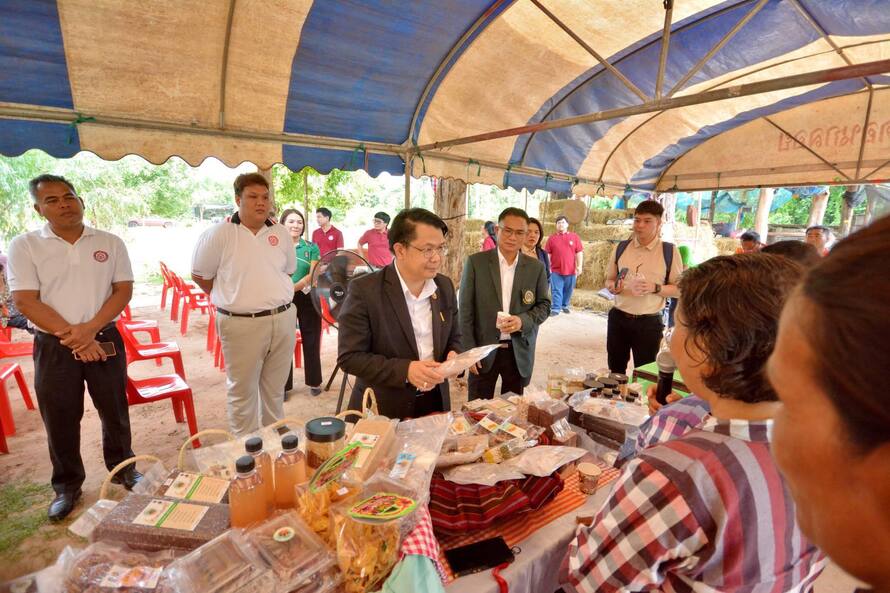
สำหรับกิจกรรมที่เกิดขึ้นเมื่อวันที่ 25 มิถุนายน 2568 ในช่วงเช้าได้มีการจัดประชุมรายงานและตรวจราชการร่วมกัน ณ ห้องประชุมชั้น 5 คณะเทคโนโลยีและวิศวกรรมศาสตร์ มหาวิทยาลัยราชภัฏอุดรธานี สามพร้าว เพื่อชี้แจงแผนงาน ผลสัมฤทธิ์ของโครงการ และความคุ้มค่าในการบริหารงบประมาณ จากนั้นในส่วนของช่วงบ่าย คณะผู้ตรวจราชการได้ลงพื้นที่เยี่ยมชมแปลงสาธิตทางการเกษตร พร้อมทั้งเดินทางไปพบปะ พูดคุย และติดตามความก้าวหน้าในการดำเนินงานของกลุ่มเกษตรกรวิสาหกิจชุมชนเป้าหมาย 3 กลุ่มในพื้นที่จังหวัดอุดรธานีอย่างใกล้ชิด
3. Partners (หุ้นส่วน)
การดำเนินงานตรวจราชการและขับเคลื่อนพื้นที่ในครั้งนี้ เกิดขึ้นจากความร่วมมืออย่างใกล้ชิดของภาคีภาคส่วนต่างๆ ประกอบด้วย กระทรวงการอุดมศึกษา วิทยาศาสตร์ วิจัยและนวัตกรรม (อว.) นำโดย นายวันนี นนท์ศิริ ผู้ตรวจราชการกระทรวงฯ และคณะ ทำงานร่วมกับ มหาวิทยาลัยราชภัฏอุดรธานี นำโดย ผศ.ดร.คณิศรา ธัญสุนทรสกุล อธิการบดี พร้อมด้วยคณะผู้บริหารและคณาจารย์จากคณะเทคโนโลยีและวิศวกรรมศาสตร์ ตลอดจนกลุ่มวิสาหกิจชุมชนเป้าหมาย 3 กลุ่มในจังหวัดอุดรธานี ได้แก่ กลุ่มเกษตรวิสาหกิจชุมชนแปรรูป ตำบลดอนกลอย อำเภอพิบูลรักษ์, กลุ่มวิสาหกิจชุมชนบ้านกล้วย อำเภอบ้านดุง และกลุ่มวิสาหกิจชุมชนกลุ่มรักษ์ดินรักษ์ข้าว ชาวนาทุ่งฝน อำเภอทุ่งฝน
4. Outputs (ผลผลิต)
แจากการลงพื้นที่ตรวจราชการ ส่งผลให้แผนงานและผลสัมฤทธิ์ของโครงการภายใต้โมเดล BCG ของมหาวิทยาลัยได้รับการตรวจสอบ ประเมินผล พร้อมทั้งได้รับข้อเสนอแนะเชิงนโยบายที่เป็นประโยชน์จากผู้ตรวจราชการกระทรวง อว. ยิ่งไปกว่านั้น ปัญหาและอุปสรรคในการดำเนินงานในพื้นฐานรากได้รับการวางแนวทางการบริหารจัดการและแนวทางการแก้ไขที่ชัดเจนและมีประสิทธิภาพมากขึ้น โดยที่แปลงสาธิตและกลุ่มเกษตรกรวิสาหกิจชุมชนทั้ง 3 แห่ง ได้รับการเข้าเยี่ยมชม ตรวจสอบ และติดตามความก้าวหน้าโดยตรงจากหน่วยงานส่วนกลางเพื่อการพัฒนาที่ต่อเนื่อง
5. Outcomes (ผลลัพธ์)
โครงการมุ่งสู่ผลลัพธ์ที่ครอบคลุม 5 มิติ ได้แก่:
มิติ SDG 1 (No Poverty - ขจัดความยากจน): เกิดการขับเคลื่อนเศรษฐกิจฐานรากใน 3 อำเภอเป้าหมาย ช่วยให้กลุ่มเกษตรกรและวิสาหกิจชุมชนมีรายได้ที่มั่นคงขึ้น ผ่านการแปรรูปและการใช้นวัตกรรมเพิ่มมูลค่าผลผลิต ยกระดับคุณภาพชีวิตของประชาชนในพื้นที่อย่างยั่งยืน
มิติ SDG 2 (Zero Hunger - ขจัดความหิวโหย บรรลุความมั่นคงทางอาหาร): พัฒนาระบบเกษตรกรรมท้องถิ่น (เช่น กลุ่มรักษ์ดินรักษ์ข้าว) ให้มีความปลอดภัย เป็นมิตรต่อสิ่งแวดล้อม และสร้างความมั่นคงทางอาหารในระดับชุมชนผ่านการขยายผลแปลงสาธิต
มิติ SDG 8 (Decent Work and Economic Growth - การจ้างงานที่มีคุณค่าและการเติบโตทางเศรษฐกิจ): มหาวิทยาลัยและกระทรวง อว. ร่วมกันส่งเสริมการสร้างงานและอาชีพในท้องถิ่น ขับเคลื่อนเศรษฐกิจชุมชนผ่านโมเดล BCG และพัฒนาศักยภาพผู้ประกอบการวิสาหกิจชุมชนให้เติบโตอย่างเข็มแข็ง
มิติ SDG 12 (Responsible Consumption and Production - การผลิตและการบริโภคที่ยั่งยืน): สนับสนุนให้กลุ่มวิสาหกิจชุมชนใช้กระบวนการผลิตและการแปรรูปตามแนวคิดเศรษฐกิจหมุนเวียน (Circular Economy) ลดความสูญเสีย และเพิ่มประสิทธิภาพการใช้วัตถุดิบในท้องถิ่น
มิติ SDG 17 (Partnerships for the Goals - ความร่วมมือเพื่อการพัฒนาที่ยั่งยืน): เสริมสร้างกลไกความร่วมมือที่เหนียวแน่นระหว่างหน่วยงานนโยบายระดับประเทศ (กระทรวง อว.) สถาบันอุดมศึกษาในพื้นที่ (มรภ.อุดรธานี) และกลุ่มวิสาหกิจชุมชนในภาคประชาสังคม เพื่อบรรลุเป้าหมายการพัฒนาที่ยั่งยืนร่วมกัน
Ministry of MHESI Delegates Visit Udon Thani Rajabhat University to Monitor BCG-Driven Grassroots Economic Development
MHESI conducts a site inspection to monitor the performance of Udon Thani Rajabhat University, focusing on driving the grassroots economy with BCG innovation.
1. Context & Rationale
This operational initiative involved an official site inspection by the Ministry of Higher Education, Science, Research and Innovation (MHESI) for the 2025 fiscal year, conducted at Udon Thani Rajabhat University (Sam Phrao Campus). The primary rationale was to monitor and evaluate the strategic performance and milestones of grassroots economic development projects driven by the BCG (Bio-Circular-Green) Economic Model. This evaluation targeted project advancement, budgetary efficiency, and local operational barriers to co-develop adaptive solutions. Consequently, this tracking process guarantees that Udon Thani Rajabhat University maintains a proactive and vital role in applying advanced science and technology to uplift the local grassroots economy and enhance the quality of life for regional citizens in a sustainable manner.
2. Activities (Conducted on June 25, 2025)
On June 25, 2025, a series of strategic activities were carried out throughout the day. The morning session featured a comprehensive performance review and official monitoring meeting held at the Faculty of Technology and Engineering to evaluate project execution plans, achievements, and long-term budget efficiency. Following the briefing, the afternoon session shifted to field operations, where the inspector delegation was dispatched to evaluate agricultural demonstration plots. This was followed by interactive community visits to meet, discuss, and track the ongoing performance and development of three targeted community enterprises located across Udon Thani province.
3. Partners
The effective delivery of this monitoring and evaluation site visit relied heavily on a multi-stakeholder alliance across national, academic, and civil society sectors. The regulatory core was driven by the Ministry of Higher Education, Science, Research and Innovation (MHESI), led by Inspector-General Mr. Wannee Nonsiri and his executive delegation. This ministerial block collaborated directly with Udon Thani Rajabhat University, led by President Asst. Prof. Dr. Khanisara Thansunthonsakul, alongside executive board members and specialized faculty from the Faculty of Technology and Engineering. Furthermore, the operational core linked directly with grassroots sectors, specifically the three targeted community enterprises in Udon Thani Province: the Processing Community Enterprise in Don Kloi Sub-district (Phibun Rak District), the Ban Kluai Community Enterprise (Ban Dung District), and the Rak Din Rak Khao (Soil and Rice Conservation) Community Enterprise (Thung Fon District)..
4. Outputs
As a direct result of these operational efforts, the university's BCG-driven project frameworks and achievements were successfully audited, evaluated, and provided with invaluable strategic and policy-level recommendations by the MHESI inspection team. Additionally, clearer, practical, and more effective guidelines were successfully established to resolve real-world operational barriers encountered in the field. Ultimately, the agricultural demonstration plots and all three community enterprises received direct structural assessment, technical oversight, and support from national-level policymakers to ensure ongoing sustainable operations.
5. Outcomes
The project aims for comprehensive outcomes across 5 key dimensions:
SDG 1 (No Poverty): Grassroots economies in the three targeted districts are stimulated, allowing local farmers and community enterprises to generate stable, sustainable income through value-added product processing, thereby uplifting the local quality of life.
SDG 2 (Zero Hunger): Local agricultural systems (e.g., the Rak Din Rak Khao group) are elevated to be safe and eco-friendly, enhancing community-level food security through demonstration farming.
SDG 8 (Decent Work and Economic Growth): Joint efforts between the university and MHESI foster local employment, drive the community economy via the BCG model, and empower community enterprises for robust growth.
SDG 12 (Responsible Consumption and Production): Community enterprises are guided to adopt production and processing methods aligned with the Circular Economy, minimizing waste and optimizing local resources.
SDG 17 (Partnerships for the Goals): A solid collaborative mechanism is reinforced among national policymakers (MHESI), regional higher education institutions (Udon Thani Rajabhat University), and grassroots community enterprises to attain shared sustainability goals.
https://news.udru.ac.th/the-ministry-of-higher-education-science-research-and-innovation-visited-the-area/