 SDG 4 — การศึกษาที่มีคุณภาพ
 วิศวกรสังคม
บริบทและเหตุผล
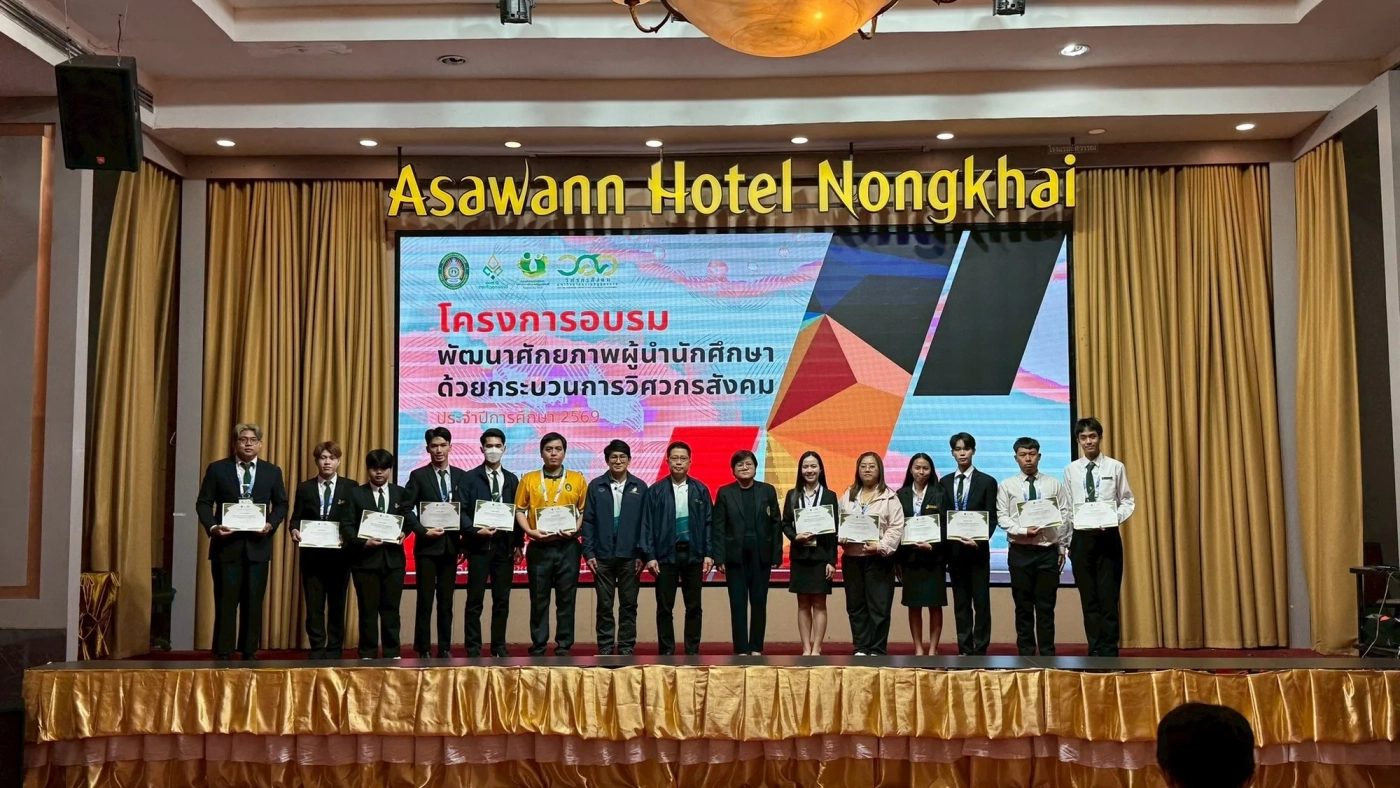
การดำเนินงานในครั้งนี้คือ “โครงการอบรมพัฒนาศักยภาพผู้นำนักศึกษา ด้วยกระบวนการวิศวกรสังคม ประจำปีการศึกษา 2569” ซึ่งจัดขึ้นระหว่างวันที่ 22 – 25 เมษายน 2569 ณ โรงแรมอัศวรรณ อำเภอเมือง จังหวัดหนองคาย โดยได้รับเกียรติจาก ผู้ช่วยศาสตราจารย์ ดร.คณิศรา ธัญสุนทรสกุล อธิการบดี เป็นประธานในพิธีเปิด โครงการนี้มีเหตุผลความจำเป็นในการยกระดับทักษะของผู้นำนักศึกษาให้ก้าวข้ามการจัดกิจกรรมสันทนาการแบบดั้งเดิม ไปสู่การเป็นผู้สร้างสรรค์นวัตกรรมสังคม การฝึกฝนทักษะแห่งศตวรรษที่ 21 ผ่านเครื่องมือ “วิศวกรสังคม” ช่วยให้นักศึกษามีทักษะการคิดวิเคราะห์อย่างเป็นระบบ มีความเข้าใจในปัญหาของชุมชนท้องถิ่นอย่างลึกซึ้ง และสามารถวางแผนกิจกรรมที่ตอบสนองต่อยุทธศาสตร์การพัฒนาท้องถิ่นของมหาวิทยาลัยราชภัฏได้อย่างแท้จริง
กิจกรรมและการดำเนินงาน
ระหว่างวันที่ 22 – 25 เมษายน 2569 กองพัฒนานักศึกษาได้ดำเนินกระบวนการอบรมเชิงปฏิบัติการอย่างเข้มข้น กิจกรรมเริ่มต้นด้วยการบรรยายชี้แจงภารกิจสนับสนุนกิจกรรมนักศึกษาโดย นายเกียรติชัย วาณิช ปฏิบัติหน้าที่ผู้อำนวยการกองพัฒนานักศึกษา จากนั้นเข้าสู่กระบวนการฝึกปฏิบัติการนำเครื่องมือ “วิศวกรสังคม” 4 สมรรถนะหลักมาใช้ ได้แก่ ทักษะการนักสังเกตเพื่อระบุปัญหาในชุมชนและมหาวิทยาลัย, ทักษะการคิดวิเคราะห์แบบมีเหตุมีผล (Logical Thinking), ทักษะการสื่อสารเพื่อสร้างความเข้าใจและระดมความร่วมมือ และทักษะการสร้างนวัตกรรมสังคม โดยเปิดโอกาสให้ผู้นำนักศึกษาร่วมกันถอดบทเรียน วางแผน และเสนอแนะโครงการกิจกรรมนักศึกษาตลอดปีการศึกษา 2569 ที่มุ่งผลสัมฤทธิ์เพื่อการพัฒนาท้องถิ่น
ภาคีเครือข่ายความร่วมมือ (หุ้นส่วน)
ความสำเร็จในการขับเคลื่อนและพัฒนาศักยภาพผู้นำนักศึกษาในครั้งนี้ เกิดจากการผนึกกำลังความร่วมมือภายในและเครือข่ายภาคี นำโดย กองพัฒนานักศึกษา มหาวิทยาลัยราชภัฏอุดรธานี ทำงานร่วมกับ กลุ่มองค์กรกิจกรรมนักศึกษา ได้แก่ องค์การนักศึกษา, สภานักศึกษา, สโมสรนักศึกษาทุกคณะ และตัวแทนชมรมนักศึกษาต่าง ๆ ควบคู่ไปกับการสร้างความร่วมมือกับ ชุมชนท้องถิ่นในเขตพื้นที่บริการของมหาวิทยาลัย เพื่อใช้เป็นพื้นที่ปฏิบัติการจริงในการสำรวจปัญหาและนำนวัตกรรมของนักศึกษาไปประยุกต์ใช้เพื่อการพัฒนา
ผลผลิตจากโครงการ
จากการดำเนินโครงการดังกล่าว ส่งผลให้เกิดผลผลิตที่เป็นรูปธรรมคือ กลุ่มผู้นำนักศึกษาจากองค์การนักศึกษา สภานักศึกษา สโมสรนักศึกษา และชมรมต่าง ๆ จำนวนหนึ่ง ได้รับการพัฒนาทักษะวิศวกรสังคมและผ่านการฝึกอบรมเชิงปฏิบัติการ ยิ่งไปกว่านั้น ยังเกิดแผนงานและโครงการกิจกรรมนักศึกษาประจำปีการศึกษา 2569 ที่บูรณาการกระบวนการวิศวกรสังคมเพื่อการพัฒนาท้องถิ่นจำนวน 1 แผนงาน ตลอดจนเกิดเครือข่ายแกนนำนักศึกษาที่พร้อมขับเคลื่อนกิจกรรมเพื่อการแก้ปัญหาชุมชนอย่างเป็นระบบ
ผลลัพธ์
โครงการมุ่งสู่ผลลัพธ์ที่ครอบคลุมมิติการพัฒนาที่ยั่งยืน ได้แก่:
มิติ SDG 4 (Quality Education - การศึกษาที่เท่าเทียมและมีคุณภาพ): เพิ่มจำนวนเยาวชนที่มีทักษะที่จำเป็นและทักษะสมรรถนะสูง ทั้งทักษะทางสังคม ทักษะการคิดวิเคราะห์ และทักษะการสร้างนวัตกรรม เพื่อการทำงานและการเป็นผู้ประกอบการสังคม (Target 4.4) การบ่มเพาะกระบวนการวิศวกรสังคมให้แก่ผู้นำนักศึกษาช่วยยกระดับคุณภาพการศึกษานอกห้องเรียน และเตรียมความพร้อมนักศึกษาให้มีสมรรถนะพร้อมรับการเปลี่ยนแปลงในอนาคต
Udon Thani Rajabhat University Empowers Student Leaders Through "Social Engineer" Workshop to Drive Community-Oriented Sustainable Development
Student Development Division at Udon Thani Rajabhat University hosts a four-day leadership workshop implementing the "Social Engineer" framework for student council and club leaders to embed soft skills, analytical thinking, and local development strategy into campus activities.
Context & Rationale This youth leadership and sustainable community development initiative involved the execution of the "Student Leader Capacity Building Workshop through the Social Engineer Process for Academic Year 2026," conducted from April 22 to 25, 2026, at Asawann Hotel, Mueang District, Nong Khai Province. The opening ceremony was presided over by President Asst. Prof. Dr. Khanisara Thansunthonsakul. The primary rationale of this intervention is to transition student activities from conventional co-curricular events into strategic community-driven innovations. Training student leaders in "Social Engineer" methodologies equips them with vital 21st-century soft skills, enabling them to systematically analyze local community issues and design impactful student projects aligned with the university's institutional mission for sustainable local development.
Activities & Operations From April 22 to 25, 2026, the Student Development Division facilitated an intensive four-day experiential learning workshop. The operational sequence began with an orientation on student activity support policies delivered by Acting Director Kiatthai Vanich. Subsequently, student leaders engaged in practical modules centered on the four core Social Engineer competencies: analytical observation of community issues, logical thinking, empathetic communication for stakeholder mobilization, and social innovation creation. Participants actively collaborated to draft, critique, and finalize the student activity action plan for Academic Year 2026, integrating local community problem-solving into all proposed projects.
Multi-Stakeholder Partnerships The successful implementation of this leadership development framework was driven by an active internal and community partnership model. Spearheaded by the Student Development Division of Udon Thani Rajabhat University, the coalition engaged student governance bodies, including the Student Union, Student Council, Faculty Student Clubs, and various student activity clubs. This student network collaborated directly with local communities across the university's service area, establishing an operational bridge between student leadership and grassroots community development.
Project Outputs As a direct outcome of these strategic operations, a representative cohort of student leaders from the Student Union, Council, and various campus clubs was certified in Social Engineer problem-solving methodologies. Additionally, the initiative produced a finalized Student Activity Master Plan for Academic Year 2026 that incorporates community-based innovation models. Ultimately, the project established an active network of trained student change-makers prepared to drive sustainable community initiatives.
Outcomes
The project aims for comprehensive outcomes across the sustainable development dimension:SDG 4 (Quality Education): Substantially increases the number of youth who have relevant soft skills, critical thinking capabilities, and innovative competencies for employment, decent jobs, and social entrepreneurship (Target 4.4). Transforming student activity planning through the Social Engineer methodology elevates experiential education quality and fosters active citizenship.
https://news.udru.ac.th/student-leader-social-engineering-workshop/