 SDG 1 — ขจัดความยากจน
 SDG 4 — การศึกษาที่มีคุณภาพ
 SDG 11 — เมืองและถิ่นฐานมนุษย์อย่างยั่งยืน
กิจกรรมอบรมเชิงปฏิบัติการ “การออกแบบลายกระติบข้าวจากคล้า”
บริบทและเหตุผล
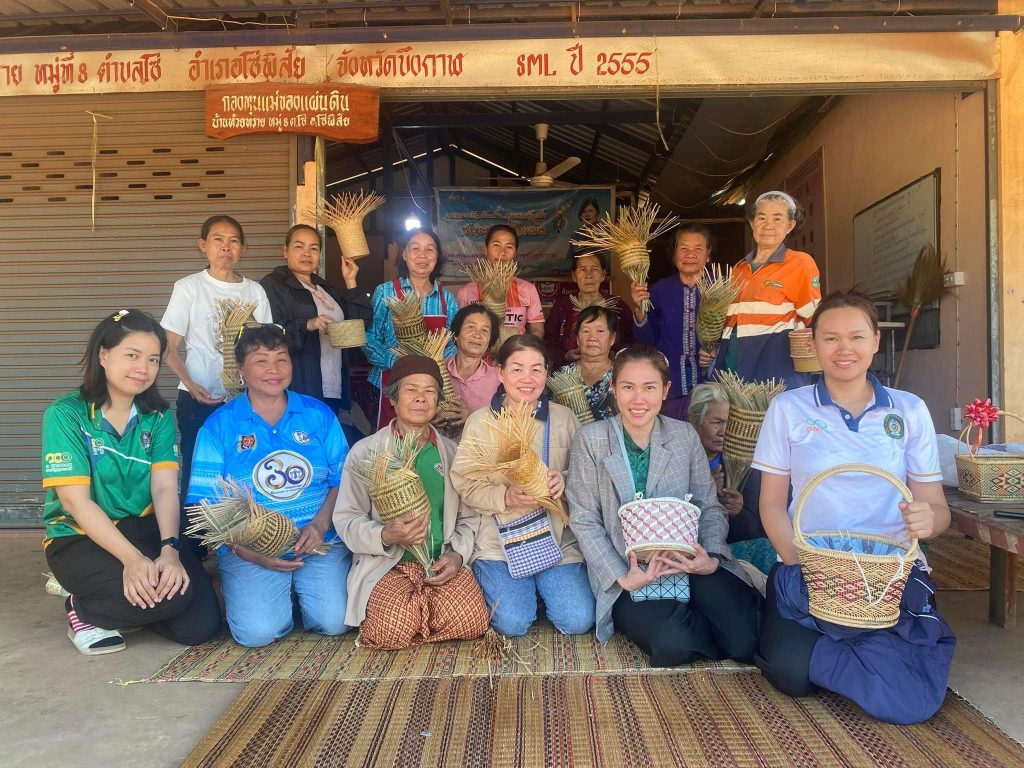
การดำเนินงานในครั้งนี้คือโครงการอบรมเชิงปฏิบัติการ “การออกแบบลายกระติบข้าวจากคล้า” ซึ่งจัดขึ้นระหว่างวันที่ 15–16 มกราคม 2568 ณ ศูนย์เรียนรู้ชุมชนบ้านห้วยทราย ตำบลโซ่ อำเภอโซ่พิสัย จังหวัดบึงกาฬ โดยมี อาจารย์ศุภางค์จิต กัลยาแก้ว และคณะทำงาน เป็นผู้ดำเนินกิจกรรมหลัก กิจกรรมนี้จัดขึ้นภายใต้โครงการ “สร้างโอกาส สร้างทักษะ ยกระดับสู่การเป็นแหล่งท่องเที่ยวโดยชุมชน” ซึ่งได้รับทุนสนับสนุนจากกองทุนเพื่อความเสมอภาคทางการศึกษา (กสศ.) โดยมีเหตุผลความจำเป็นในการฟื้นฟูและยกระดับหัตถกรรมพื้นบ้าน การนำวัสดุธรรมชาติในท้องถิ่นอย่าง "คล้า" มาสร้างมูลค่าเพิ่ม และการส่งเสริมเศรษฐกิจสร้างสรรค์ในระดับฐานราก เพื่อสร้างโอกาสในการประกอบอาชีพ เพิ่มรายได้แก่คนในชุมชน ตลอดจนยกระดับชุมชนบ้านห้วยทรายให้พร้อมสู่การเป็นแหล่งท่องเที่ยวโดยชุมชนที่ยั่งยืน
กิจกรรมและการดำเนินงาน
ในระหว่างวันที่ 15–16 มกราคม 2568 ได้มีการจัดกระบวนการเรียนรู้เชิงปฏิบัติการร่วมกันระหว่างทีมผู้เชี่ยวชาญจากมหาวิทยาลัยและชาวบ้านในชุมชนบ้านห้วยทราย กิจกรรมหลักครอบคลุมการฝึกทักษะการเตรียมวัสดุคล้า การถ่ายทอดเทคนิคการจักสานเชิงสร้างสรรค์ และการร่วมกันออกแบบและพัฒนาลวดลายกระติบข้าวร่วมสมัยใหม่จำนวน 3 ลาย ได้แก่ 1) ลายตบตีนเต่า ที่เน้นการเรียงตัวเป็นจังหวะสวยงาม 2) ลายสองยืน ที่มีความเรียบง่ายแต่แฝงด้วยความประณีต และ 3) ลายหัวใจ ที่สื่อถึงความรักและความผูกพันของคนในชุมชน นอกจากนี้ ยังจัดให้มีเวทีการแลกเปลี่ยนเรียนรู้ ประสบการณ์ และแนวทางการต่อยอดผลิตภัณฑ์หัตถกรรมสู่ตลาดท่องเที่ยวเชิงวัฒนธรรม
ภาคีเครือข่ายความร่วมมือ (หุ้นส่วน)
ความสำเร็จในการขับเคลื่อนงานพัฒนาทักษะและหัตถกรรมชุมชนในครั้งนี้ เกิดจากการบูรณาการความร่วมมือระหว่างสถาบันอุดมศึกษา หน่วยงานสนับสนุนทุน และชุมชนท้องถิ่น นำโดย วิทยาลัยนวัตกรรมแห่งบึงกาฬ มหาวิทยาลัยราชภัฏอุดรธานี (นำโดย อาจารย์ศุภางค์จิต กัลยาแก้ว และคณะทำงาน) ในฐานะหน่วยงานถ่ายทอดองค์ความรู้และนวัตกรรม ทำงานร่วมกับ กองทุนเพื่อความเสมอภาคทางการศึกษา (กสศ.) ในฐานะผู้สนับสนุนทุนโครงการ ตลอดจน ศูนย์เรียนรู้ชุมชนบ้านห้วยทราย ปราชญ์ชาวบ้าน และประชาชนผู้ร่วมเรียนรู้ในตำบลโซ่ อำเภอโซ่พิสัย จังหวัดบึงกาฬ ที่ร่วมกันลงมือปฏิบัติและขับเคลื่อนโครงการอย่างใกล้ชิด
ผลผลิตจากโครงการ จากการดำเนินโครงการดังกล่าว ส่งผลให้เกิดลวดลายกระติบข้าวจากคล้ารูปแบบใหม่จำนวน 3 ลวดลายเอกลักษณ์ ได้แก่ ลายตบตีนเต่า ลายสองยืน และลายหัวใจ ยิ่งไปกว่านั้น ผู้เข้าร่วมการอบรมได้รับทักษะการออกแบบเชิงสร้างสรรค์และการใช้วัสดุธรรมชาติอย่างพิถีพิถัน ตลอดจนเกิดต้นแบบผลิตภัณฑ์กระติบข้าวร่วมสมัยที่มีมูลค่าสูงขึ้น และเกิดเวทีเครือข่ายการแลกเปลี่ยนเรียนรู้ด้านงานหัตถกรรมภายในชุมชนบ้านห้วยทรายเพื่อการถ่ายทอดสู่คนรุ่นหลังต่อไป
ผลลัพธ์
โครงการมุ่งสู่ผลลัพธ์ที่ครอบคลุม 3 มิติ ได้แก่:
- มิติ SDG 1 (No Poverty - ขจัดความยากจน): ยกระดับรายได้และขจัดความยากจนในระดับชุมชน โดยการยกระดับผลิตภัณฑ์หัตถกรรมพื้นบ้านให้เป็นสินค้าท่องเที่ยวเชิงสร้างสรรค์ ช่วยสร้างอาชีพเสริม เสริมสร้างทักษะการพึ่งพาตนเองทางเศรษฐกิจ และกระจายรายได้สู่ครัวเรือนในพื้นที่อย่างยั่งยืน
- มิติ SDG 4 (Quality Education - การศึกษาที่เท่าเทียมและมีคุณภาพ): ขยายโอกาสในการเรียนรู้ตลอดชีวิต (Lifelong Learning) และการพัฒนาทักษะอาชีพ (Vocational Skills) ให้แก่ชาวบ้านและกลุ่มเปราะบางในชุมชน ผ่านกระบวนการเรียนรู้เชิงปฏิบัติการนอกห้องเรียนที่เน้นการลงมือทำจริงและการบูรณาการภูมิปัญญาท้องถิ่นเข้ากับนวัตกรรมการออกแบบ
- มิติ SDG 11 (Sustainable Cities and Communities - เมืองและชุมชนที่ยั่งยืน): สนับสนุนการปกป้อง สดุดี และสืบสานมรดกทางวัฒนธรรมและภูมิปัญญาท้องถิ่น (Target 11.4) ผ่านการฟื้นฟูงานจักสานคล้า และการใช้วัสดุธรรมชาติที่เป็นมิตรต่อสิ่งแวดล้อม ช่วยเสริมสร้างความเข้มแข็ง พัฒนาเศรษฐกิจท่องเที่ยวโดยชุมชน (CBT) และสร้างความภาคภูมิใจในอัตลักษณ์ของชุมชนบ้านห้วยทรายอย่างยั่งยืน
Bueng Kan Innovation College, Udon Thani Rajabhat University Conducts Kratip Rice Container Weaving Workshop Using Donax Canniformis to Upskill House Huai Sai Community
Bueng Kan Innovation College of Udon Thani Rajabhat University organizes a practical workshop on designing Kratip rice container patterns using Donax canniformis (Kla) to empower the Ban Huai Sai community through local handicraft innovations and sustainable tourism development.
Context & Rationale
This community empowerment initiative centered on the practical workshop "Designing Kratip Rice Container Patterns from Donax canniformis (Kla)," held from January 15 to 16, 2025, at the Ban Huai Sai Community Learning Center, So Sub-district, So Phisai District, Bueng Kan Province. Led by Lecturer Supangjit Kalayakeaw and the operational team, the workshop was executed under the project "Creating Opportunities, Building Skills, Elevating to Community-Based Tourism," funded by the Equitable Education Fund (EEF). The core rationale of this project is to revitalize local folk handicrafts, add economic value to native natural materials like Donax canniformis, and stimulate the grass-roots creative economy. This initiative creates employment opportunities, generates household income, and prepares the Ban Huai Sai community for sustainable community-based tourism (CBT).
Activities & Operations
From January 15 to 16, 2025, an interactive co-creation workshop was conducted involving university experts and local community members. Key operational activities included training on raw material preparation, teaching creative weaving techniques, and co-designing three distinctive contemporary bamboo/reed patterns: 1) Tob Teen Tao (Rhythmic Turtle Foot Pattern), 2) Lai Song Yuen (Upright Double Weave Pattern), and 3) Lai Hua Jai (Heart Pattern, symbolizing community unity). Furthermore, the workshop hosted knowledge-sharing sessions to discuss strategies for scaling handicraft products into cultural tourism markets.
Multi-Stakeholder Partnerships
The successful delivery of this skill-building and handicraft development initiative relied on a multi-stakeholder alliance linking higher education, funding agencies, and local grassroots communities. The operational core was driven by Bueng Kan Innovation College, Udon Thani Rajabhat University (led by Lecturer Supangjit Kalayakeaw and project staff), which provided academic expertise and design innovation. This academic team worked in direct partnership with the Equitable Education Fund (EEF) as the financial sponsor, as well as the Ban Huai Sai Community Learning Center, local artisans, and community participants from So Sub-district, So Phisai District, Bueng Kan Province.
Project Outputs
As a direct result of these joint operations, three unique signature patterns for Donax canniformis rice containers (Tob Teen Tao, Lai Song Yuen, and Lai Hua Jai) were successfully developed. Moreover, local trainees gained practical proficiencies in creative pattern design and sustainable natural material utilization. Ultimately, the project generated high-value contemporary handicraft prototypes and established a community learning network within Ban Huai Sai to preserve and pass down weaving wisdom to future generations.
Outcomes
The project aims for comprehensive outcomes across 3 key dimensions:
- SDG 1 (No Poverty): Alleviates local poverty and boosts household income by transforming traditional handicrafts into high-value cultural tourism merchandise, creating supplementary jobs and strengthening economic self-reliance.
- SDG 4 (Quality Education): Enhances lifelong learning opportunities and vocational skills for rural community members through hands-on, community-based workshops that blend traditional local wisdom with modern design innovation.
- SDG 11 (Sustainable Cities and Communities): Safeguards and celebrates local cultural heritage and intangible wisdom (Target 11.4) by revitalizing native Donax canniformis weaving. The use of eco-friendly local resources strengthens community-based tourism (CBT) ecosystems and fosters long-term community pride and resilience.
https://bk1.udru.ac.th/วิทยาลัยนวัตกรรมแห่งบึ-5/