 SDG 1 — ขจัดความยากจน
ยกระดับผลิตภัณฑ์ชุมชนจากภูมิปัญญาและวัสดุในท้องถิ่น ‘ปุ๋ยอัดเม็ด’ สู่ระดับ ‘Premium’
บริบทและเหตุผล
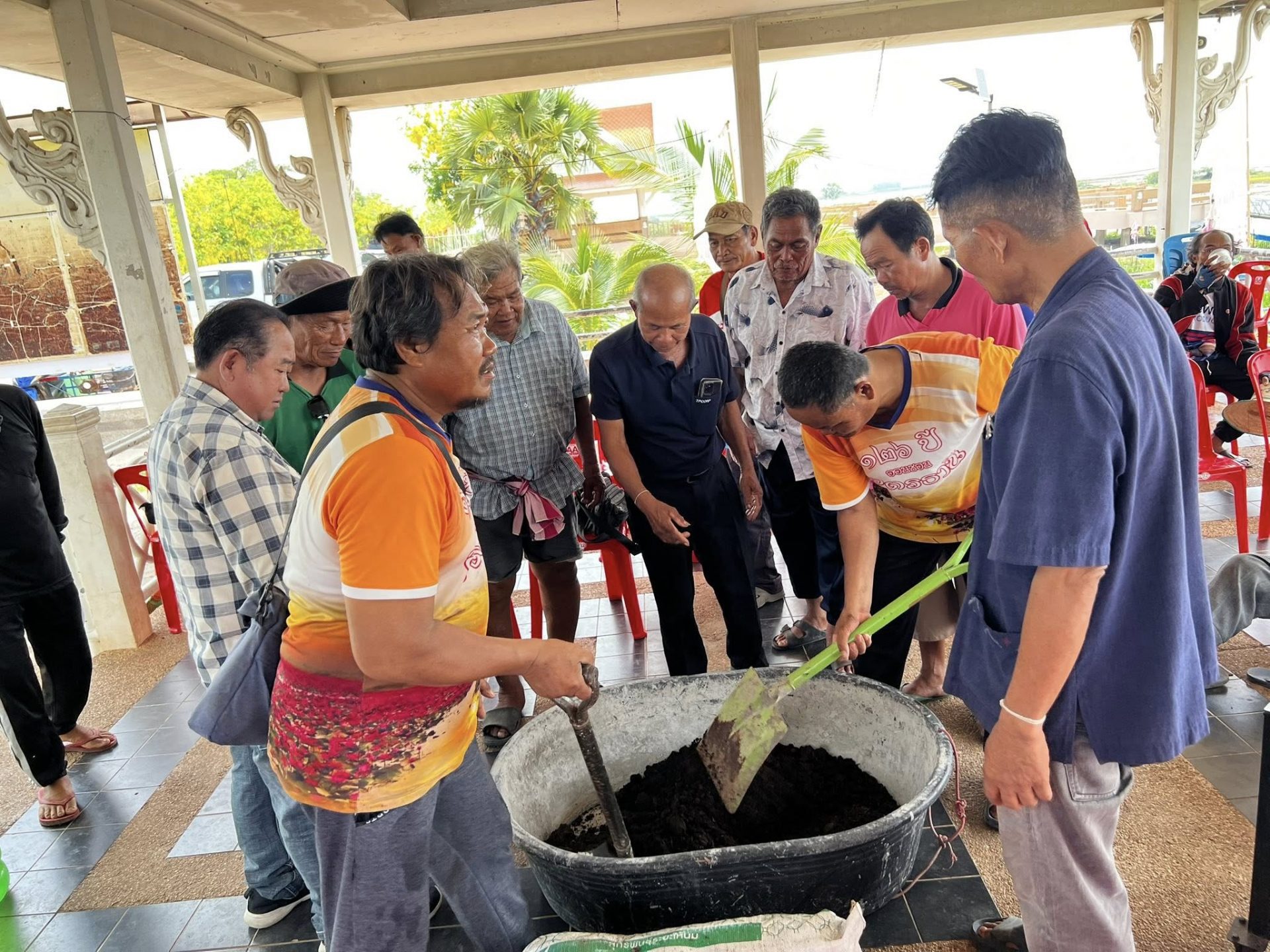
การดำเนินงานในครั้งนี้คือ กิจกรรมยกระดับผลิตภัณฑ์ชุมชนจากภูมิปัญญาและวัสดุในท้องถิ่น “ปุ๋ยอัดเม็ด” สู่ระดับ “Premium” ภายใต้โครงการพัฒนาและยกระดับเศรษฐกิจชุมชน ส่งเสริมอาชีพและพัฒนาผลิตภัณฑ์ด้วยวัฒนธรรมภูมิปัญญาท้องถิ่น จัดขึ้นระหว่างวันที่ 14 - 15 พฤษภาคม 2568 ณ พื้นที่ทะเลบัวแดง บ้านเดียม ตำบลเชียงแหว อำเภอกุมภวาปี จังหวัดอุดรธานี นำโดย ผศ.นวรัตน์ บุญภิละ รองผู้อำนวยการฝ่ายบริการวิชาการและวิจัย สำนักวิชาศึกษาทั่วไป มหาวิทยาลัยราชภัฏอุดรธานี ร่วมกับภาคีเครือข่ายอนุรักษ์ควายไทย โครงการนี้มีเหตุผลความจำเป็นในการขจัดปัญหาความยากจนเชิงพื้นที่และการขาดแคลนรายได้ของเกษตรกรในท้องถิ่น การนำวัสดุเหลือใช้และวัชพืชในชุมชนมาแปรรูปเป็นผลิตภัณฑ์มูลค่าสูง ถือเป็นกลไกยุทธศาสตร์สำคัญในการสร้างรายได้เสริม ลดต้นทุนการผลิตทางการเกษตร เสริมสร้างความเข้มแข็งทางเศรษฐกิจฐานราก และช่วยให้ชุมชนสามารถพึ่งพาตนเองได้อย่างยั่งยืน
กิจกรรมและการดำเนินงาน
ระหว่างวันที่ 14 - 15 พฤษภาคม 2568 กระบวนการดำเนินงานได้ขับเคลื่อนผ่านการศึกษา วิเคราะห์ศักยภาพพื้นที่ และการฝึกอบรมเชิงปฏิบัติการผลิตปุ๋ยอัดเม็ดคุณภาพสูง กิจกรรมหลักประกอบด้วย การวิเคราะห์ศักยภาพวัตถุดิบในท้องถิ่น, การนำมูลควายผสมรวมกับแหน จอก และวัชพืชทางน้ำที่เก็บกู้จากบริเวณทะเลบัวแดง มาผ่านกระบวนการหมักและอัดเม็ดด้วยเทคโนโลยีที่เหมาะสม เพื่อพัฒนาเป็น “ปุ๋ยอัดเม็ดเกรดพรีเมียม” ตลอดจนการส่งเสริมทักษะการบริหารจัดการผลิตภัณฑ์และการสร้างมูลค่าเพิ่มทางการค้า เพื่อกระจายรายได้สู่ชุมชนบ้านเดียมอย่างเป็นรูปธรรม
ภาคีเครือข่ายความร่วมมือ (หุ้นส่วน)
ความสำเร็จในการส่งเสริมอาชีพและสร้างรายได้ให้แก่ชุมชนในครั้งนี้ เกิดจากการผนึกกำลังความร่วมมืออย่างเข้มแข็ง นำโดย ฝ่ายบริการวิชาการและวิจัย สำนักวิชาศึกษาทั่วไป มหาวิทยาลัยราชภัฏอุดรธานี ทำงานร่วมกับ ศูนย์ส่งเสริมอนุรักษ์และพัฒนาควายไทยจังหวัดอุดรธานี และ สมาคมอนุรักษ์และพัฒนาควายไทยจังหวัดอุดรธานีในพระอุปถัมภ์ฯ ผนึกกำลังร่วมกับ ผู้นำชุมชนและกลุ่มเกษตรกรในพื้นที่บ้านเดียม ตำบลเชียงแหว อำเภอกุมภวาปี จังหวัดอุดรธานี
ผลผลิตจากโครงการ จากการดำเนินโครงการดังกล่าว ส่งผลให้เกิดผลผลิตที่เป็นรูปธรรมคือ การจัดกิจกรรมฝึกอบรมและพัฒนายกระดับผลิตภัณฑ์ชุมชนจำนวน 1 โครงการ และ เกิดนวัตกรรมผลิตภัณฑ์ “ปุ๋ยอัดเม็ดเกรดพรีเมียม” จากมูลควายและวัชพืชทะเลบัวแดงจำนวน 1 ผลิตภัณฑ์ ยิ่งไปกว่านั้น ยังเกิดการสร้างมูลค่าเพิ่มให้แก่วัตถุดิบเหลือใช้ในท้องถิ่น ตลอดจนเกิดรูปแบบการส่งเสริมอาชีพเพื่อเพิ่มรายได้และสร้างความมั่นคงทางเศรษฐกิจให้แก่ครัวเรือนเกษตรกรในชุมชนอย่างเป็นรูปธรรม
ผลลัพธ์
โครงการมุ่งสู่ผลลัพธ์ที่ครอบคลุมมิติการพัฒนาที่ยั่งยืน ได้แก่
มิติ SDG 1 (No Poverty - ขจัดความยากจน): สร้างหลักประกันว่าคนยากจนและกลุ่มเป้าหมายที่เปราะบางมีสิทธิเท่าเทียมกันในการเข้าถึงทรัพยากรทางเศรษฐกิจ รวมถึงนวัตกรรม เทคโนโลยีที่เหมาะสม และโอกาสในการสร้างรายได้ (Target 1.4) การยกระดับปุยอัดเม็ดจากมูลควายและวัชพืชทะเลบัวแดงสู่เกรดพรีเมียม ช่วยสร้างอาชีพใหม่ เพิ่มรายได้แก่เกษตรกร ลดรายจ่ายค่าปุ๋ยเคมี บรรเทาปัญหาความยากจนในระดับครัวเรือน และสร้างความเข้มแข็งทางเศรษฐกิจฐานรากให้แก่ชุมชนกุมภวาปีอย่างยั่งยืน
Udon Thani Rajabhat University Transforms Local Buffalo Manure and Red Lotus Lake Aquatic Weeds into Premium Pelletized Fertilizer to Boost Rural Household Income
Udon Thani Rajabhat University partners with local Thai buffalo conservation associations to launch a community economic development project in Kumphawapi District, converting buffalo manure and aquatic weeds from Red Lotus Lake into premium pelletized fertilizer to generate sustainable grassroots income.
Context & Rationale
This grassroots poverty reduction and eco-friendly economic initiative involved launching the community product transformation activity "Upgrading Local Wisdom and Native Materials to Premium Pelletized Fertilizer," held from May 14 to 15, 2025, in Ban Diam, Chiang Wae Subdistrict, Kumphawapi District, Udon Thani Province. The initiative was led by Asst. Prof. Navarat Boonbhila, Deputy Director of Academic Services and Research at the General Education Division, Udon Thani Rajabhat University, alongside local buffalo conservation associations. The primary rationale of this intervention is to mitigate rural poverty and economic vulnerability by leveraging abundant local agricultural waste. Transforming raw buffalo manure and invasive aquatic weeds into high-value agricultural inputs serves as a strategic catalyst to lower farming costs, generate supplementary household income, and build self-reliant rural economies.
Activities & Operations
From May 14 to 15, 2025, the operational sequence was executed through spatial resource assessments and hands-on bio-fertilizer production workshops. Key operational workflows included analyzing local raw material supply, processing raw buffalo manure combined with duckweed and harvested aquatic weeds from Red Lotus Lake, and applying mechanical pelletization techniques to produce "Premium-Grade Pelletized Fertilizer." Furthermore, the team trained community members in product standardization, quality control, and value-added commercialization strategies tailored for local markets.
Multi-Stakeholder Partnerships
The successful execution of this rural livelihood program was built on a strong multi-stakeholder alliance. Spearheaded by the Academic Services and Research Division, General Education Division at Udon Thani Rajabhat University, the project partnered directly with the Udon Thani Thai Buffalo Promotion, Conservation and Development Center and the Udon Thani Thai Buffalo Conservation and Development Association under Royal Patronage, collaborating with local farmer groups and community leaders in Ban Diam, Kumphawapi District.
Project Outputs
As a direct outcome of these strategic operations, 1 community economic empowerment program was delivered, and 1 standardized bio-product "Premium Pelletized Fertilizer" derived from buffalo manure and aquatic weeds—was successfully developed. Additionally, the project established a functional waste-to-wealth processing framework and equipped local farmers with eco-friendly fertilizer manufacturing skills.
Outcomes
The project aims for comprehensive outcomes across the sustainable development dimension
SDG 1 (No Poverty): Ensures that all men and women, in particular the poor and the vulnerable, have equal rights to economic resources, appropriate technology, and income-generating opportunities (Target 1.4). Converting local organic waste into premium pelletized fertilizer creates new income streams for rural households, reduces agricultural expenditure, and fosters sustainable economic resilience in vulnerable farming communities.
https://ge.udru.ac.th/website/2025/05/15/กิจกรรมยกระดับผลิตภัณฑ/